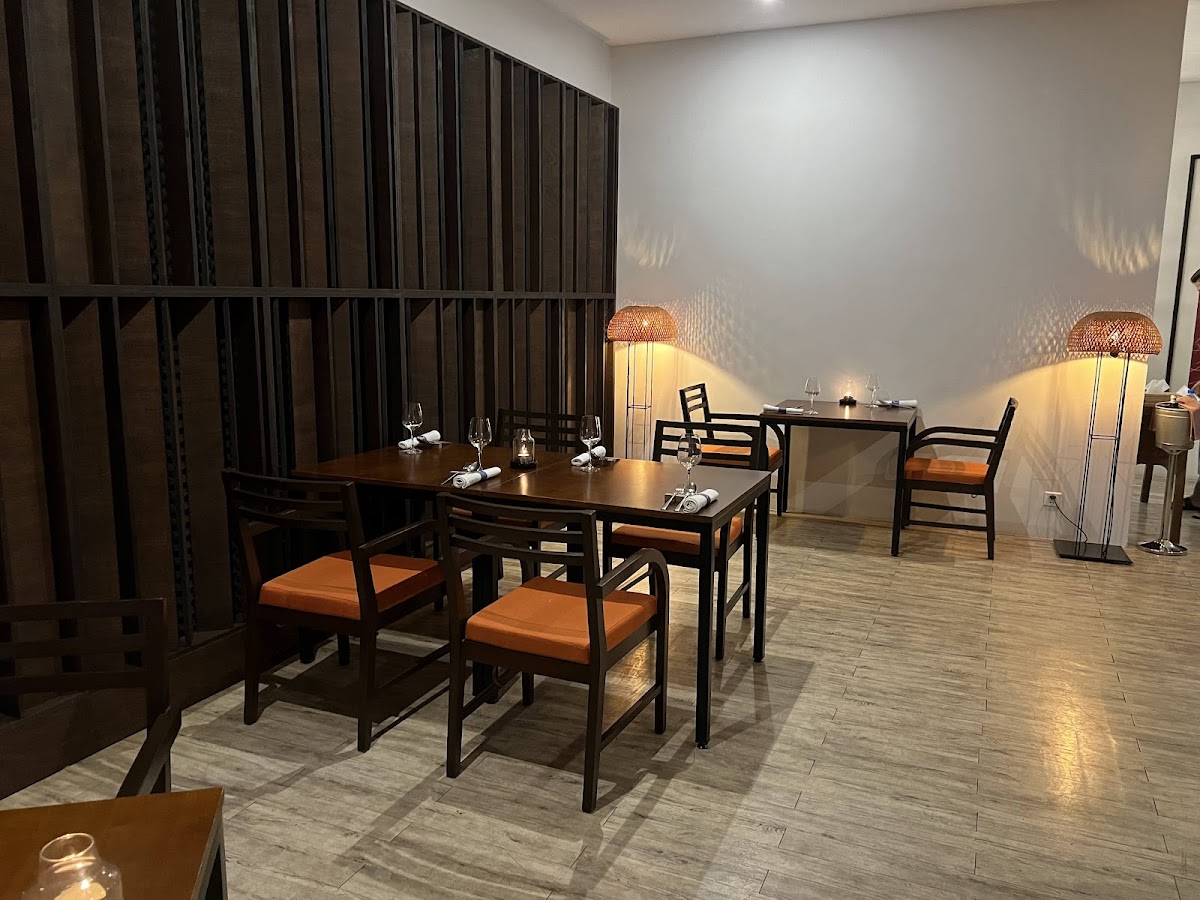
Wow! Highly recommended! This is our second visit in two years (we tried the tasting menu last year). This year’s festive tasting menu was amazing and well worth the slightly higher price (USD 65 pp). Each dish was a taste sensation, innovative and a creative Asian/Western journey (see photos and menu). The standouts were langoustine soup (reminiscent to a refined laksa but elevated by the complementary ingredients) and the beef cheeks! The restaurant is quiet and not crowded (only three occupied tables when we visited on a weekday). The staff are attentive and professional. Only downside is the ambience and decor which is a bit bland and generic (in contrast to the food) Probably one of our top picks for Phnom Penh other than Kravanh and Sombok (more traditional Khmer food). Thank you, we will be back!
Overview
Walking into Restaurant Cuisine Wat Damnak feels like stepping into a calm, confident slice of Phnom Penh’s modern food scene. Tucked away at 29 Samdech Mongkol Iem St. (228), Phnom Penh 12253, Cambodia, the space doesn’t shout for attention. Instead, it invites you to slow down, look around, and get ready for a meal that’s thoughtful from start to finish. I’ve eaten here more than once, both with visiting friends and on quieter work dinners, and the experience has been remarkably consistent in the best way.
The menu is where things get interesting. Rather than overwhelming diners with endless options, the kitchen focuses on a seasonal chef’s tasting menu that changes regularly. This approach mirrors what many globally respected restaurants do, including those recognized by the Michelin Guide, which has consistently highlighted Cuisine Wat Damnak for its refined take on Cambodian flavors. The idea is simple but demanding in execution: use what’s fresh, treat ingredients with respect, and let technique elevate tradition. Each visit has brought a different lineup of dishes, but the balance between creativity and familiarity always holds.
One memorable example was a course built around freshwater fish sourced from nearby rivers. The preparation was delicate, lightly cooked to preserve texture, and paired with herbs I’d seen in local markets but rarely tasted so clearly on a plate. This is where the farm-to-table philosophy becomes more than a buzzword. According to data from the Food and Agriculture Organization, sourcing locally can significantly improve ingredient freshness and reduce food waste, and Cuisine Wat Damnak puts that research into practice daily. You can taste it in the brightness of the vegetables and the clean finish of each dish.
Service deserves its own moment. The staff know the menu inside out and explain each course without sounding rehearsed. On one visit, I asked about a fermentation technique used in a sauce, and the explanation was clear enough for a curious diner without oversimplifying the process. That kind of confidence usually comes from strong training and close collaboration between front and back of house. It also builds trust, especially for diners new to Cambodian fine dining.
Reviews from both local regulars and international travelers often mention how approachable the experience feels despite its reputation. That matches my own impression. You don’t need deep culinary knowledge to enjoy the meal, but if you have it, there’s plenty to unpack. The restaurant has become a reference point in Phnom Penh for modern Khmer cuisine, often discussed alongside culinary institutions supported by organizations like UNESCO that promote the preservation of regional food heritage.
The location adds another layer. Being slightly removed from the busiest tourist streets gives the restaurant a neighborhood feel, yet it’s still easy to reach. For anyone planning a food-focused trip, this spot often anchors the itinerary, and for good reason. Prices reflect the level of craftsmanship, which might not suit every budget, but there’s transparency in what you’re paying for: skill, time, and quality ingredients.
It’s worth noting a small limitation. Because the menu changes frequently and seating is limited, spontaneous visits can be tricky. Booking ahead is almost essential, especially during peak travel months. That said, this controlled approach is part of what allows the kitchen to maintain such a high standard.
Taken as a whole, the experience blends atmosphere, technique, and cultural respect in a way that feels genuine rather than performative. From the evolving menu to the knowledgeable service and carefully chosen location, every detail works together, making each visit feel personal and well considered.
Good to know
Service options
✓ Outdoor seating ✓ Takeaway ✓ Dine-inHighlights
✓ Great cocktails ✓ Great dessert ✓ Great wine listPopular for
✓ Lunch ✓ Dinner ✓ Solo diningAccessibility
✓ Wheelchair-accessible seatingOfferings
✓ Alcohol ✓ Beer ✓ Cocktails ✓ Coffee ✓ Small plates ✓ Vegan options ✓ Vegetarian options ✓ WineDining options
✓ Lunch ✓ Dinner ✓ Dessert ✓ Seating ✓ Table serviceAmenities
✓ ToiletAtmosphere
✓ Cosy ✓ Romantic ✓ TrendyCrowd
✓ Groups ✓ TouristsPlanning
✓ Dinner reservations recommended ✓ Accepts reservationsPayments
✓ Credit cards ✓ Debit cards ✓ NFC mobile paymentsChildren
✓ Good for kidsParking
✓ Free of charge street parkingPhotos
Location
Reviews
We had great pleasure experiencing the vegetarian testing menu with 8 dishes. We really recommend it. Thanks for having us we’ll come back
An exceptional meal with fantastic service. I had the vegan tasting menu and my husband had the regular tasting menu. Delicious dishes, with innnovative flavours using local ingredients. We were blown away by this wonderful restaurant and friendly service. Thank you for an unforgettable meal!
Like a ‘Best of Cambodian ingredients’, all wonderfully presented. Food combinations brought with finesse and with some surprising tastes. The red wines could use a bit more room temperature, but don’t let it hold you back - great experience.
An experience like no other, the use of local ingredients, a menu crafted with creativity and extreme knowledge. Delicious and new. Constantly have new menu. Service is wonderful, place is gorgeous.
As frequent travelers from NYC, we’re always on the lookout for the next great meal. Unfortunately, our dinner didn’t quite hit the mark. The presentations were amazing, but the taste was a bit off. Honestly, it might have been the local flavors that we weren’t used to. After having enjoyed local cuisines from over 90 countries, it was tough to think that the entire tasting menu didn’t hit the spot for me, except for the dessert. The anniversary dessert was a nice touch. But hey, don’t take my word for it! Go ahead and try it for yourself.
Sat inside. 6 course tasting menu. What’s really important here is that every dish has a Khmer flavour and ingredients. After a few weeks in the country that was recognisable. Happy not to be given their attempt at best of international food. Go with that mindset. I thought it was superb. Sat inside - courtyard not so sure